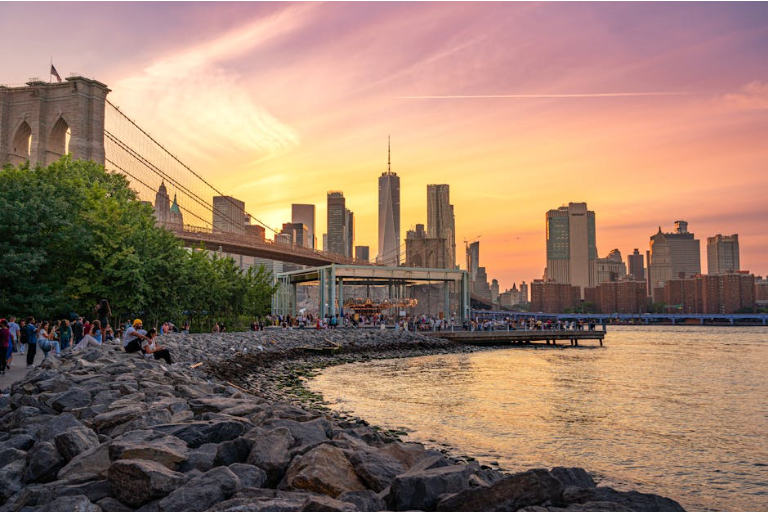
Planning construction work in DUMBO? That innocent-looking street tree 40 feet from your brownstone could derail your entire project—and cost you $15,000 if you get the permits wrong. Here's what triggers NYC's strict tree protection requirements.
Key Takeaways
- Any construction work within 50 feet of a city street tree in DUMBO requires a Tree Work Permit from NYC Parks before starting construction
- The DOB ST-1 checklist mandates tree protection reviews for building permits, often requiring NYC Parks plan examination for Certificate of Occupancy approval
- Critical Root Zone calculations use a DBH formula where the radius equals one foot per inch of trunk diameter, with a minimum of four feet and a maximum of 22 feet
- ISA-certified arborists expedite permit approvals through proper documentation, site photos, and early planning that prevent costly construction delays
- Violation penalties can reach $15,000 plus imprisonment for up to one year for illegal tree removal or damage to city trees
DUMBO's dense urban canopy sits at the intersection of Brooklyn's waterfront development boom and New York City's complex tree protection regulations. For brownstone and row house owners planning construction or renovation projects, understanding these permit requirements isn't optional—it's required for avoiding costly delays and hefty penalties.
DUMBO Construction Projects Trigger NYC Tree Permit Requirements
The 50-foot rule serves as the primary trigger for NYC Parks' involvement in DUMBO construction projects. This regulation applies to any work performed within 50 feet of a city street tree, requiring a Tree Work Permit before construction begins. The rule recognizes that construction activities can impact trees far beyond their visible canopy, affecting root systems and soil conditions that extend well beyond the trunk.
NYC Parks manages all street trees in DUMBO's curbside and right-of-way areas. Property owners cannot prune, remove, or significantly impact these trees without proper authorization. This regulatory framework protects DUMBO's urban forest while ensuring development projects comply with the city's broader environmental goals. Green Pocket NYC connects Brooklyn homeowners with ISA-certified arborists who specialize in navigating these complex permit requirements, helping property owners understand which trees fall under city jurisdiction versus private responsibility.
The regulatory landscape extends beyond simple proximity rules. Construction permits, sidewalk work, and utility installations all trigger different levels of Parks Department oversight. Even seemingly minor projects like fence installation or driveway expansion can require tree impact assessments if they occur within the regulated distance from protected trees.
When Your DUMBO Project Requires Tree Work Permits
1. The 50-Foot Rule: Automatic Permit Trigger
The 50-foot measurement creates a protective buffer zone around each city street tree, extending far beyond what most property owners expect. This distance accounts for the tree's Critical Root Zone, which typically extends one foot per inch of the tree's diameter at breast height (DBH), with a minimum of four feet and a maximum of 22 feet from the trunk. Within this zone, any construction activity that could disturb soil, compact earth, or damage roots requires Parks Department approval.
Construction activities that automatically trigger permit requirements include excavation, grade changes, equipment storage, material staging, and temporary structure installation. Even activities that seem harmless, like parking construction vehicles or storing building materials, can cause soil compaction that damages root systems. The rule applies regardless of property lines, meaning work on private property can still require permits if it occurs within 50 feet of a street tree.
2. DOB ST-1 Checklist: Building Permit Prerequisites
The NYC Department of Buildings implemented the ST-1 Street Tree Checklist as a mandatory component of building permit applications. This system emerged after significant tree losses during construction projects, creating a multi-step review process that protects the urban forest. The ST-1 checklist determines compliance with street tree requirements for new building, alteration, and enlargement applications.
The checklist serves as a screening tool that identifies when NYC Parks must examine building plans as part of the permit approval process. Projects that impact existing street trees or require new street tree plantings must undergo this additional review. The DOB cannot issue certain permits until Parks Department approval is secured, creating an integrated approach to construction oversight that prevents tree damage.
3. NYC Parks Plan Review: Certificate of Occupancy Requirements
Certificate of Occupancy (CO) approval often depends on the successful completion of tree-related requirements identified during the permit process. NYC Parks may require final inspections to verify that approved tree protection measures were properly implemented and that any required new plantings are completed according to specifications. This final review ensures that construction projects fulfill their commitments to urban forest preservation and enhancement.
The CO process creates accountability for long-term tree care commitments. Projects that include new tree plantings must demonstrate proper installation, appropriate species selection, and adequate growing conditions. Failure to meet these requirements can delay occupancy approval, making early coordination with certified arborists needed for project completion.
Critical Root Zone Protection During Construction
Critical Root Zone Calculation: DBH Formula and Minimum Requirements
The Critical Root Zone (CRZ) represents the most vital area for tree health, calculated using the tree's diameter at breast height (DBH) measured 4.5 feet above ground level. NYC regulations define the CRZ radius as one foot per inch of DBH, with a minimum of four feet and a maximum of 22 feet from the trunk. This scientific approach recognizes that root systems extend well beyond what trunk diameter alone might suggest.
For example, a tree with a 20-inch DBH would have a CRZ extending 20 feet from the trunk. Smaller trees with DBH measurements under four inches still receive the four-foot minimum protection radius. These measurements become critical when planning construction activities and temporary installations around protected trees.
Permitted vs. Prohibited Construction Activities
Construction activities within the CRZ face strict limitations designed to prevent root damage and soil compaction. Generally prohibited activities include mechanical excavation, heavy equipment operation, material storage, vehicle parking, and grade changes that could alter drainage patterns. These restrictions apply even when roots aren't visible, as the most critical feeder roots often exist in the top 12-18 inches of soil.
Certain activities may be permitted under specific conditions and often require supervision by ISA-certified arborists. Hand excavation may be allowed under specific conditions, using pneumatic tools or hand digging to avoid root damage. Temporary installations like scaffolding or protective barriers can be approved if they don't require ground penetration and include measures to prevent soil compaction through load distribution techniques.
Hand Excavation and Supervised Work Requirements
When excavation within the CRZ becomes unavoidable, NYC Parks typically requires hand excavation techniques performed under arborist supervision. This approach allows workers to carefully expose and evaluate roots before making decisions about cutting or preservation. ISA-certified arborists provide the expertise needed to distinguish between critical structural roots and smaller feeder roots that can be safely removed if necessary.
Supervised excavation often employs pneumatic tools that break up soil without causing the blunt-force trauma associated with mechanical excavation. Air spades and similar equipment can expose root systems without damage, allowing precise evaluation of conflicts between roots and planned construction elements. This careful approach often identifies alternative construction methods that avoid root damage entirely.
Tree Inventory & Verification Reports (TIVR)
When NYC Parks Requires TIVR Documentation
Tree Inventory & Verification Reports (TIVR) serve as detailed assessments required by NYC Parks for various development projects and permit applications. These detailed documents catalog existing tree conditions, locations, species, and health status, creating a baseline record that informs construction planning and post-project monitoring. TIVR requirements typically apply to larger projects, developments affecting multiple trees, or situations where tree preservation is particularly complex.
NYC Parks mandates TIVR documentation when construction projects have the potential to impact multiple trees or when long-term tree preservation strategies require detailed planning. The reports must be prepared by qualified professionals who can accurately assess tree health, identify potential conflicts with proposed construction, and recommend appropriate protection measures. This documentation becomes part of the permanent project record, establishing accountability for tree preservation commitments.
Required Components of Impact Assessment Reports
Detailed tree impact reports include site surveys showing precise tree locations relative to proposed construction activities. Each tree receives individual assessment, including species identification, size measurements (DBH and height), condition ratings, and photographic documentation. The reports must clearly identify which trees face potential impacts and provide specific recommendations for protection or mitigation measures.
Impact assessments also address the cumulative effects of construction activities on the broader urban forest. Reports evaluate how multiple tree impacts might affect neighborhood canopy coverage and recommend replacement plantings or alternative preservation strategies. This broader perspective helps satisfy NYC Parks' mandate to maintain and enhance the city's urban forest while accommodating necessary development projects.
ISA-Certified Arborists Navigate DUMBO's Complex Requirements
Why Certified Expertise Expedites Permit Approvals
ISA-certified consulting arborists bring specialized knowledge of NYC Parks regulations, tree biology, and construction impact assessment that significantly expedites permit approvals. These professionals understand the specific documentation requirements, photographic standards, and technical language that Parks Department reviewers expect. Their expertise in urban forestry allows them to anticipate potential regulatory concerns and address them proactively in permit applications.
Certified arborists also maintain working relationships with Parks Department staff, understanding current policy interpretations and application preferences that can streamline the review process. This institutional knowledge proves invaluable when navigating complex projects that might otherwise face extended review periods or multiple revision requests. Their professional credentials provide credibility that supports permit applications and construction planning decisions.
Required Documentation and Site Photos
Permit applications must include documentation packages that meet Parks Department standards for completeness and technical accuracy. Required materials typically include a detailed project description letter explaining construction activities and their potential tree impacts, survey drawings showing precise tree locations relative to the proposed work, and design plans demonstrating compliance with tree protection requirements.
Site photography follows specific protocols that document existing conditions and support written assessments. Photos must clearly show tree trunks, canopy conditions, surrounding site features, and any existing damage or stress indicators. Digital images require proper labeling and must be taken at appropriate times of year to represent tree health and seasonal conditions accurately. This visual documentation becomes critical during permit reviews and post-construction inspections.
Early Planning Prevents Construction Delays
Engaging ISA-certified arborists during early project planning phases allows identification of potential tree conflicts before design details become fixed. This proactive approach often reveals alternative construction methods, revised site layouts, or enhanced protection strategies that satisfy both development goals and tree preservation requirements. Early arborist involvement can prevent costly design changes that might otherwise be required during permit review.
The permit application process itself can take several weeks or months, depending on project complexity and Parks Department workload. Starting this process early in project development ensures that tree-related approvals don't become critical path items that delay construction schedules. Experienced arborists can provide realistic timelines for permit approvals and suggest strategies for managing multiple approval processes simultaneously.
Violation Penalties Reach $15,000 Plus Imprisonment
New York City imposes severe penalties for unauthorized tree removal or damage to city trees, with fines reaching up to $15,000 per tree plus potential imprisonment for up to one year. These substantial penalties reflect the city's commitment to protecting its urban forest and the significant value that healthy street trees provide to neighborhood environmental quality. The penalty structure creates strong financial incentives for compliance with permit requirements and proper tree protection during construction.
Enforcement extends beyond simple removal violations to include damage caused by construction activities, unauthorized pruning, and failure to implement approved protection measures. Even seemingly minor damage to root systems or trunk areas can trigger significant penalties if it occurs without proper permits. The cumulative financial risk of multiple tree violations can quickly exceed the cost of proper permit applications and professional arborist services, making compliance the economically rational choice for property owners.
Criminal penalties add another layer of deterrence, recognizing that damage to public trees affects community environmental quality and represents theft of public resources. Repeat offenders or cases involving multiple trees may face enhanced penalties that include both maximum fines and imprisonment. This enforcement framework underscores the seriousness with which New York City approaches urban forest protection.
Brooklyn Arborists Streamline DUMBO Tree Compliance
Brooklyn-based arborist services have developed specialized expertise in DUMBO's unique regulatory environment, offering support for DOB compliance consulting and NYC Parks permit assistance. These local professionals understand the specific challenges that waterfront development creates for tree preservation, including salt exposure, wind stress, and soil limitations that affect both existing trees and new plantings. Their neighborhood-specific knowledge proves invaluable for property owners navigating complex permit requirements.
Local arborists provide end-to-end project support, from initial site assessments through final inspections and ongoing tree care. This approach ensures continuity throughout the permit and construction process, with consistent professional oversight that satisfies regulatory requirements while protecting long-term tree health. Many Brooklyn arborist firms offer emergency response services for storm damage or construction-related incidents, providing 24/7 availability that matches the urgent nature of tree-related construction issues.
The specialized nature of DUMBO's waterfront environment requires arborists who understand both standard NYC regulations and the unique conditions created by proximity to the East River. These professionals can recommend appropriate species for new plantings, design protection strategies for existing trees, and provide ongoing maintenance programs that address salt exposure and other environmental stressors specific to Brooklyn's waterfront neighborhoods.
For DUMBO property owners planning construction projects, early consultation with Brooklyn's certified arborists represents risk management that prevents delays, reduces regulatory complications, and protects valuable urban forest resources. Contact Green Pocket NYC to connect with ISA-certified arborists who specialize in Brooklyn tree compliance and regulatory navigation.