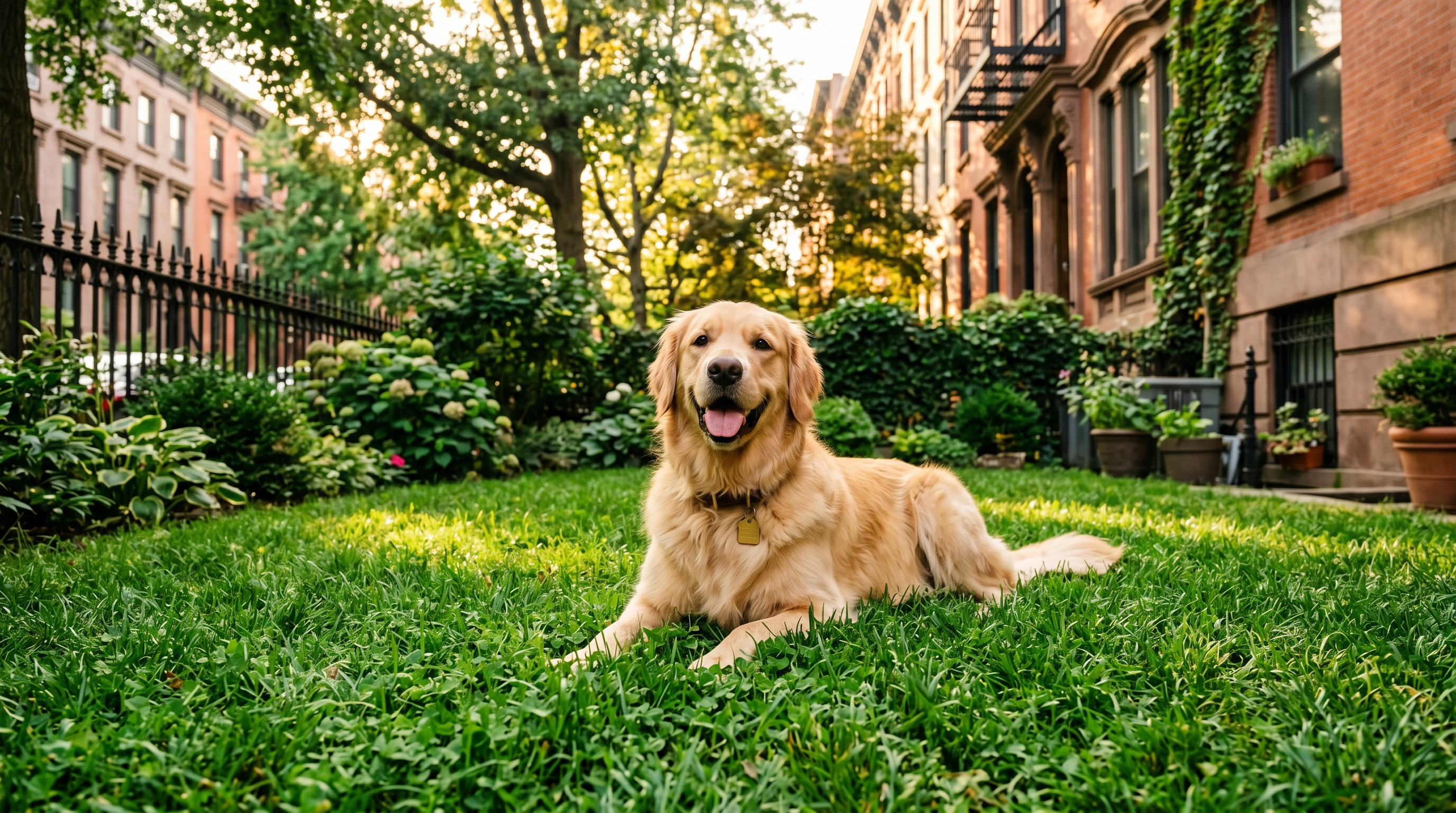
Pet-Safe Organic Lawn Care for Brooklyn Dog Owners: Weekly Schedule + Cost
Brooklyn dog owners using chemical lawn treatments face a startling reality: their pets have twice the lymphoma rate of unexposed dogs. But there's a safer approach that doesn't require waiting days before letting your pup back outside—and it costs less than you'd think.
Key Takeaways
- Organic lawn care allows immediate dog re-entry versus 24-72 hours with chemical treatments - dogs can safely play on organically treated lawns right after application
- Brooklyn organic programs cost $100-$200 monthly but eliminate cancer-linked chemicals like 2,4-D and glyphosate that studies show increase canine lymphoma risk by up to 70%
- Corn gluten meal serves as both pre-emergent weed control and natural fertilizer - perfect for Brooklyn's small yards, where multi-purpose products maximize space efficiency
- Fall timing (September 20 - October 18) is critical for Brooklyn's Zone 6a lawns - missing the aeration and overseeding window significantly impacts next year's lawn health
- Tall Fescue grass handles Brooklyn dog traffic better than Kentucky Bluegrass while requiring less water and recovering faster from urine spots
Brooklyn dog owners face a challenging choice every spring: beautiful green lawns or pet safety. The good news? Organic lawn care delivers both without the 24-72 hour waiting periods, chemical residues, or health risks that come with conventional treatments.
Why Chemical Lawn Care Puts Your Dog at Risk
Studies from Purdue University and Tufts University reveal alarming statistics about lawn chemicals and canine health. Dogs whose owners use lawn treatments containing 2,4-D show twice the rate of lymphoma compared to unexposed dogs. Even more concerning, research found that herbicide exposure increases bladder cancer risk in Scottish Terriers by seven times.
The problem isn't just ingestion - it's absorption. A 2013 peer-reviewed study confirmed that herbicides are detectable in dogs' urine after walking on treated lawns. Dogs absorb chemicals through their paw pads, skin contact, and normal grooming behavior. These substances then cling to their fur and get tracked into your home.
Green Pocket NYC connects Brooklyn homeowners with vetted organic lawn care professionals who understand that pet safety and lawn beauty aren't mutually exclusive. Chemical lawn treatments create additional problems beyond health risks: synthetic nitrogen forces unnatural top growth that leads to thatch buildup and shallow root systems, ultimately weakening your lawn's ability to withstand Brooklyn's summer heat and dog traffic.
New York City's trend toward pesticide-free public spaces validates the organic approach. The city has reduced synthetic pesticide use in public parks and banned them on school grounds, recognizing the health implications for both people and pets.
Brooklyn's Organic Lawn Care Schedule for Dog Owners
Brooklyn sits in USDA Zone 6a with a 216-day growing season, creating specific timing requirements for effective organic lawn care. Missing these windows significantly impacts lawn health and your investment.
1. Spring Setup: Mid-March Pre-Emergent and April-May Feeding
The pre-emergent window opens February 16 and closes March 16 - before soil temperature hits 55°F. Corn gluten meal applied during this period prevents crabgrass germination while providing slow-release nitrogen. This timing is non-negotiable in Brooklyn's climate.
April brings the first organic fertilizer application when soil reaches 55-65°F. Fish emulsion or kelp-based fertilizers feed the soil biology that chemical treatments destroy. Start weekly mowing once grass reaches 3 inches (typically April 20) and maintain a 3-3.5 inch cutting height.
Turn on irrigation systems around April 13, watering 2-3 times weekly in the morning only. This ensures grass blades dry before evening, reducing disease pressure during Brooklyn's humid springs.
2. Summer Maintenance: Weekly Mowing with Strategic Watering and Urine Spot Control
Summer organic maintenance focuses on stress prevention rather than forced growth. Raise mower height to 3.5-4 inches to shade the soil and conserve moisture. Leave clippings on the lawn during dry periods to return nutrients and encourage beneficial microbial activity.
Dog urine spots require immediate attention - rinse with plain water to dilute nitrogen concentration and prevent brown burn patches. Check and rinse spots daily during hot weather when nitrogen concentration becomes most damaging.
Spot-treat weeds with horticultural vinegar as needed, targeting individual plants rather than broadcast spraying. July and August bring brown patch risk during humid periods - apply thin compost layers to affected areas to encourage beneficial microorganisms that outcompete disease pathogens.
August marks Japanese beetle season in Brooklyn. Apply beneficial nematodes to control grubs naturally without chemical residues that harm your dogs or beneficial insects.
3. Fall Recovery: Late August-September Aeration and Overseeding
September 20 through October 18 represents Brooklyn's most critical lawn care window. Core aeration during this period relieves soil compaction from summer foot traffic and dog play while allowing organic fertilizers to penetrate deeper.
Overseeding immediately after aeration takes advantage of optimal soil conditions and moderate temperatures. Tall Fescue or Perennial Ryegrass blends work best for dog households - Tall Fescue tolerates traffic and urine better than Kentucky Bluegrass, while Perennial Ryegrass germinates quickly (7-10 days) for fast results.
Fall organic fertilizer should emphasize potassium for winter hardiness rather than nitrogen for growth. This builds root reserves that fuel spring emergence without late-season growth that weakens plants before winter.
Restrict dog access to seeded areas for 2-3 weeks while new grass establishes. Create temporary pathways with stepping stones or designated play areas to maintain yard function during germination.
4. Winter Protection: Late Fall Fertilization and Minimal Intervention
Winter lawn care emphasizes protection over activity. Limit foot and dog traffic on frozen turf to prevent compaction damage that creates spring problems. Clear snow promptly from pet pathways, but avoid all de-icing salts near lawn edges.
Use pet-safe ice melt (calcium magnesium acetate) instead of sodium chloride, which burns grass and irritates paw pads. January and February provide an ideal time for equipment maintenance - sharpen mower blades and plan next season's organic program.
Cost Breakdown: What Brooklyn Dog Owners Actually Pay
Brooklyn's organic lawn care pricing reflects the borough's premium labor costs and urban logistics challenges, typically running 15-30% above national averages but delivering immediate pet safety benefits that conventional programs cannot match.
Professional Organic Programs: Seasonal Package Pricing
Full-service organic programs in Brooklyn range from $600-$1,500 annually for seasonal packages that include 4-6 applications. Monthly organic treatment programs cost $100-$200, while weekly maintenance combining mowing and organic care runs $75-$225 per visit.
Core aeration costs $300-$450 in NYC - significantly above the national average of $107-$202 due to Brooklyn's dense neighborhoods and equipment transport challenges. Professional overseeding adds $50-$150, depending on lawn size and seed selection.
The upfront premium pays dividends through reduced veterinary costs from chemical exposure, fewer lawn renovation needs from synthetic fertilizer damage, and elimination of 24-72 hour yard restrictions that disrupt your dogs' routines.
DIY Organic Materials: Product-by-Product Costs
Budget-conscious dog owners can implement effective organic programs using retail products. Corn gluten meal costs $35-$55 per bag, covering one pre-emergent application for typical Brooklyn yard sizes. Fish emulsion fertilizer runs $25-$40 per bag for 2-3 applications.
Compost top-dressing costs $15-$30 per bag, while beneficial nematodes for grub control add $20-$40 annually. A complete DIY organic program for small Brooklyn yards (under 1,000 square feet) typically costs $150-$400 yearly in materials.
Labor represents the primary cost difference between DIY and professional organic care. Brooklyn homeowners comfortable with seasonal applications and weekly mowing can achieve professional results at significant savings while maintaining maximum pet safety.
Dog-Safe Products That Actually Work in Brooklyn
Brooklyn's unique growing conditions - clay soil, limited space, and intense dog traffic - require specific organic solutions that deliver results without compromising pet safety.
1. Corn Gluten Meal: Pre-Emergent Prevention Plus Natural Fertilizer
Corn gluten meal stands out as the ideal Brooklyn product, serving dual functions in space-constrained yards. As a pre-emergent, it prevents crabgrass and dandelion germination when applied before the soil reaches 55°F. Simultaneously, it provides slow-release nitrogen that feeds grass throughout spring.
This OMRI-listed product requires no waiting period for dogs and won't burn grass even if over-applied. For Brooklyn's small yards, where storage and application efficiency matter, corn gluten meal eliminates the need for separate pre-emergent and fertilizer products.
Apply at 20 pounds per 1,000 square feet during the February 16 - March 16 window. Water lightly after application, but avoid heavy irrigation that washes away the protective barrier.
2. Best Grass Types for Brooklyn Dog Households
Tall Fescue represents the optimal choice for Brooklyn dog owners, offering superior traffic tolerance and urine burn resistance compared to Kentucky Bluegrass. Brooklyn Botanic Garden specifically recommends Tall Fescue for Zone 6a conditions, citing its drought tolerance and ability to withstand urban stresses.
Perennial Ryegrass provides fast germination (7-10 days) for quick repair of dog-damaged areas. Its rapid establishment makes it ideal for fall overseeding when you need results before winter dormancy.
Fine Fescue blends work well in Brooklyn's shaded side yards where dog traffic is lighter. These low-maintenance grasses require less water and fertilizer while tolerating the reduced sunlight common in brownstone landscapes.
Consider allowing white clover in your lawn mix - Brooklyn Botanic Garden endorses clover for its nitrogen-fixing ability, which reduces fertilizer requirements while providing completely dog-safe ground cover.
3. Organic vs Chemical: Immediate vs 24-72 Hour Re-Entry
The re-entry timeline represents the most significant practical difference between organic and chemical lawn care for dog households. Organic fertilizers, compost applications, and biological treatments allow immediate dog access - no waiting, no restrictions, no disrupted routines.
Conventional chemical fertilizers require 24-72 hours after watering in before dogs can safely return. Synthetic herbicides mandate minimum 24-hour waiting periods, but residues often persist much longer on dense grass that dogs contact during play.
Horticultural vinegar for spot weed treatment requires only 30 minutes to 1 hour for surface drying before dogs can return. This targeted organic approach controls weeds without broadcast chemical applications that create yard-wide restrictions.
Brooklyn's Vetted Organic Lawn Care Professionals
Brooklyn's organic lawn care market includes both national franchises and local specialists who understand the borough's unique challenges. Clean Air Lawn Care operates franchise locations throughout NYC, offering electric equipment and pesticide-free programs specifically designed for urban pet households.
Lawn Care Force Brooklyn provides organic-only services with local expertise in brownstone and row house properties. Their pesticide-free approach includes soil health programs that address Brooklyn's compacted clay soils without chemical inputs.
Arborpolitan combines ISA-certified tree care with organic lawn services, ideal for properties where mature trees create shade and root competition challenges. Their integrated approach addresses the whole landscape ecosystem rather than treating grass in isolation.
When evaluating providers, verify their organic certification (OMRI-listed products), insurance coverage, and specific experience with pet households. Ask about their re-entry policies and whether they offer immediate-access organic programs versus modified chemical treatments.
Get Your Dog-Safe Lawn Program Started This Week
Starting an organic lawn care program requires understanding Brooklyn's seasonal windows and your dogs' specific needs. Begin with soil testing to establish baseline conditions - most providers offer this service for $50-$150, or you can use DIY kits for basic pH and nutrient analysis.
If you're starting mid-season, focus on immediate safety improvements: stop any chemical treatments, switch to organic fertilizers, and begin weekly urine spot rinsing. Fall represents the ideal entry point for organic programs, allowing winter planning and spring implementation.
Consider your dogs' yard usage patterns when planning treatments. Heavy play areas may need more frequent overseeding and organic soil amendments, while perimeter areas can often succeed with minimal intervention.
Document your lawn's condition with photos before starting organic treatments. Organic programs build results gradually through soil health improvement rather than quick chemical responses, so tracking progress helps maintain realistic expectations during the transition period.
Contact multiple providers for estimates and ask specific questions about pet safety protocols, organic certification, and re-entry timelines to ensure their programs align with your dogs' health priorities.
For trusted, vetted organic lawn care professionals who understand Brooklyn's unique landscape challenges, Green Pocket NYC connects local homeowners with quality service providers focused on pet-safe, environmentally responsible lawn care.