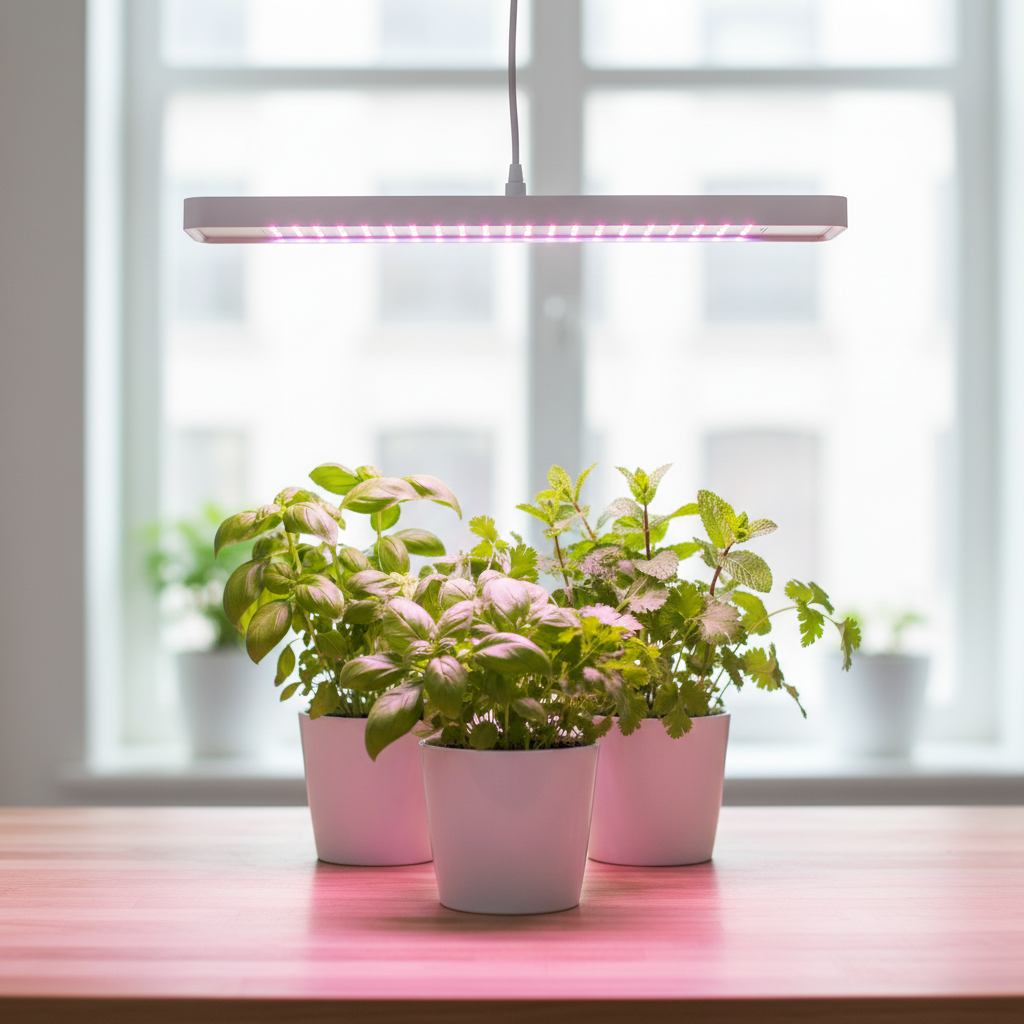
Many Brooklyn apartments are, let's face it, pretty dark. Garden-level units, north-facing windows, or buildings blocking your sun—it's a common challenge. But artificial lighting has come a long way, and today's grow lights can successfully replace or supplement natural light.
Types of Grow Lights
LED Grow Lights: The modern standard. Energy-efficient, long-lasting, and available in full-spectrum options that mimic natural sunlight. Our top recommendation for home use.
Fluorescent Lights: T5 and CFL bulbs work for low-light plants and seedlings. Affordable but less efficient than LEDs.
Full-Spectrum vs. Purple Lights: Those purple/pink lights you see? They're optimized for plant growth but can be harsh on human eyes. Full-spectrum white LEDs look more natural and work just as well.
Key Specifications Explained
Lumens: Measures brightness. Most houseplants need 2,000-5,000 lumens. Herbs and vegetables need 5,000-10,000.
Color Temperature (Kelvin): 5,000-6,500K mimics daylight and is ideal for most plants. Lower values (2,700K) are better for flowering.
PPFD: The gold standard for plant lighting. Measures actual light plants can use. Aim for 100-300 —mol/m—/s for most houseplants.
Our Top Recommendations
For Houseplants: A simple LED desk lamp with a 5000K bulb. Position 12-18 inches above plants for 8-12 hours daily.
For Herbs/Vegetables: A dedicated grow light panel or strip light. More intensity and coverage for hungry plants.
For Large Collections: Full grow light shelving systems with built-in timers.
Check out our Compact LED Grow Light in the store—perfect for Brooklyn apartment growers.